

This site is no longer active!
If you are the owner, you must reactive this site for it to be published again
or contact us at support@rebolthq.com

If you are the owner, you must reactive this site for it to be published again
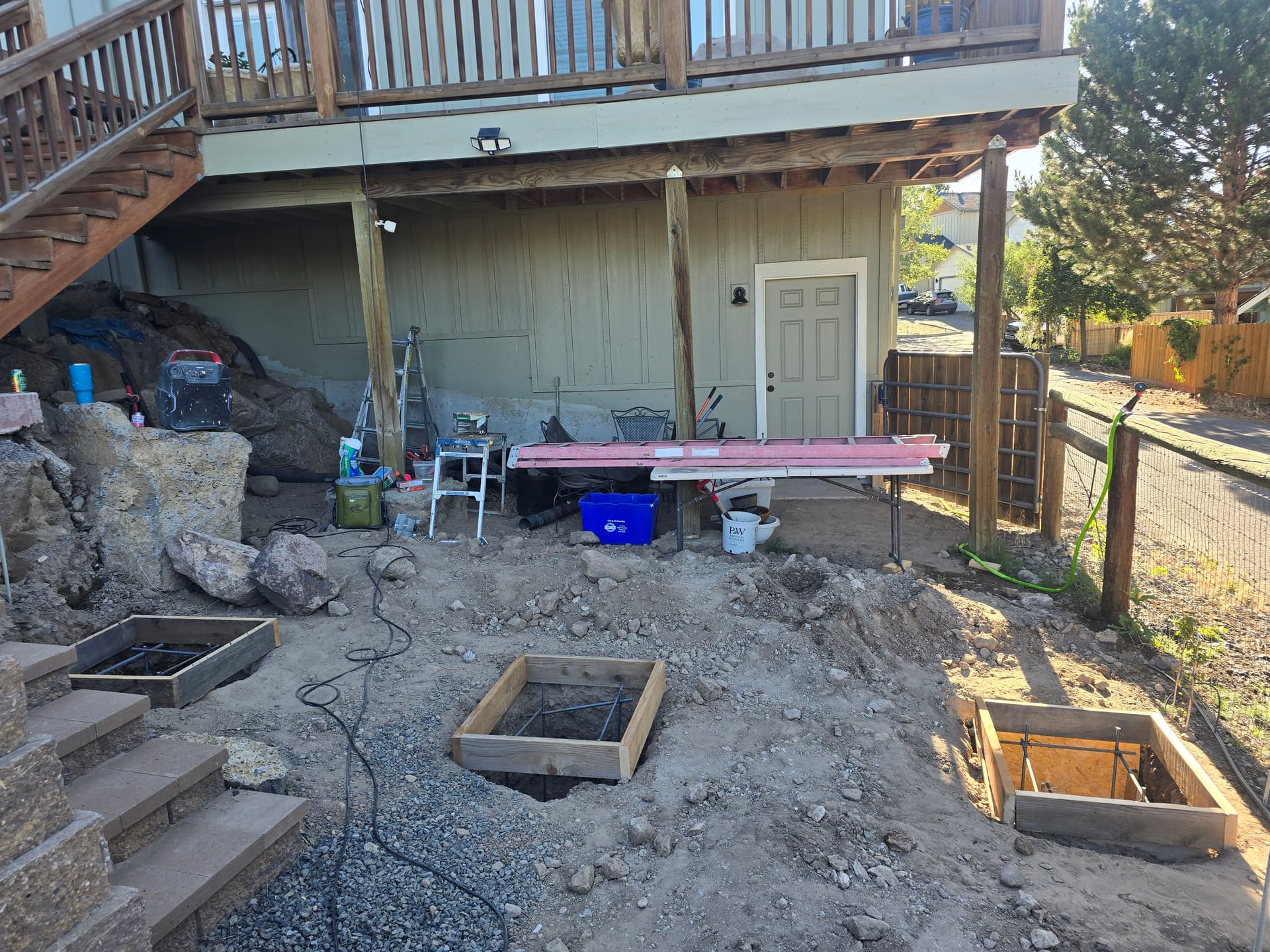
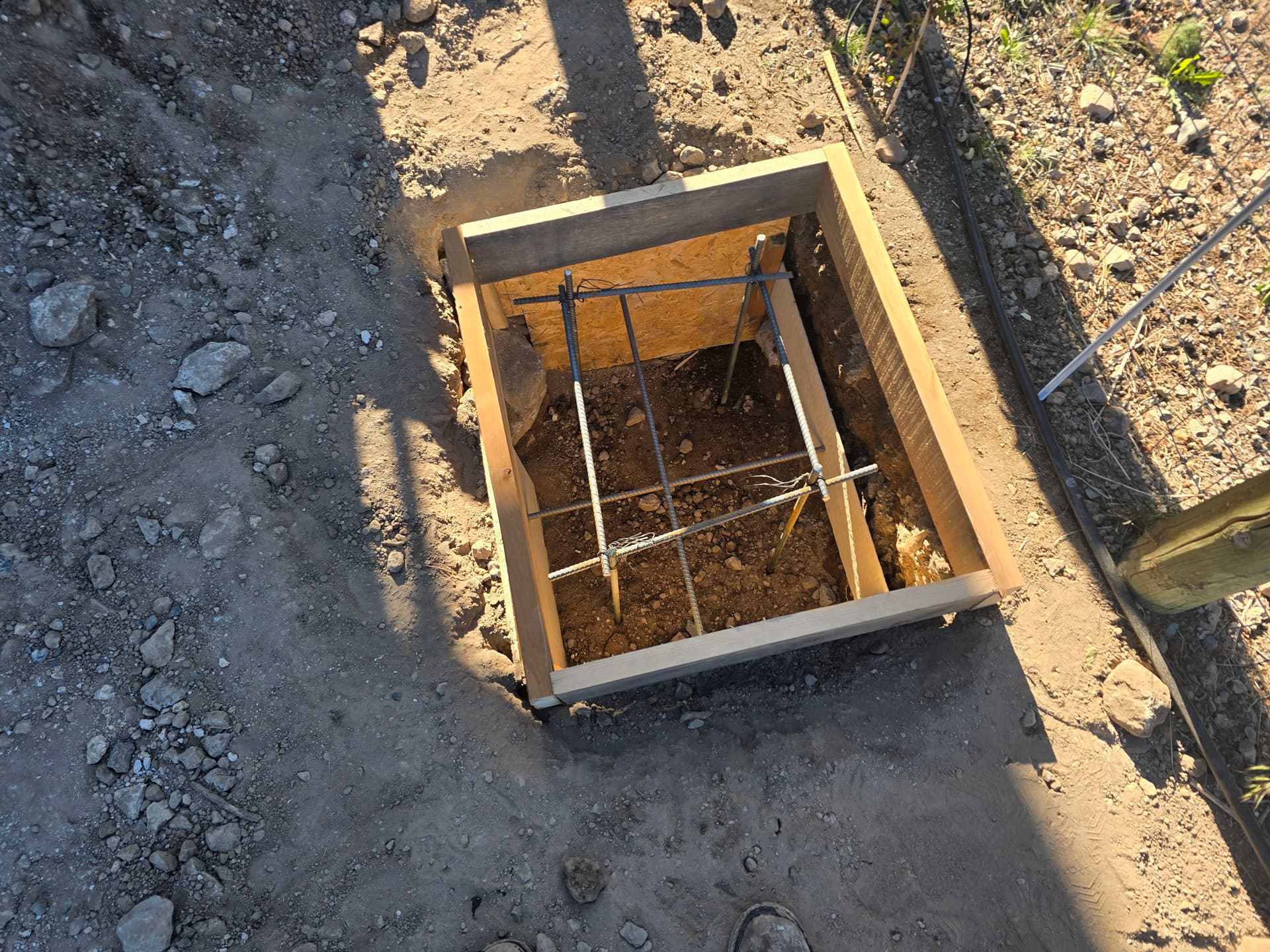
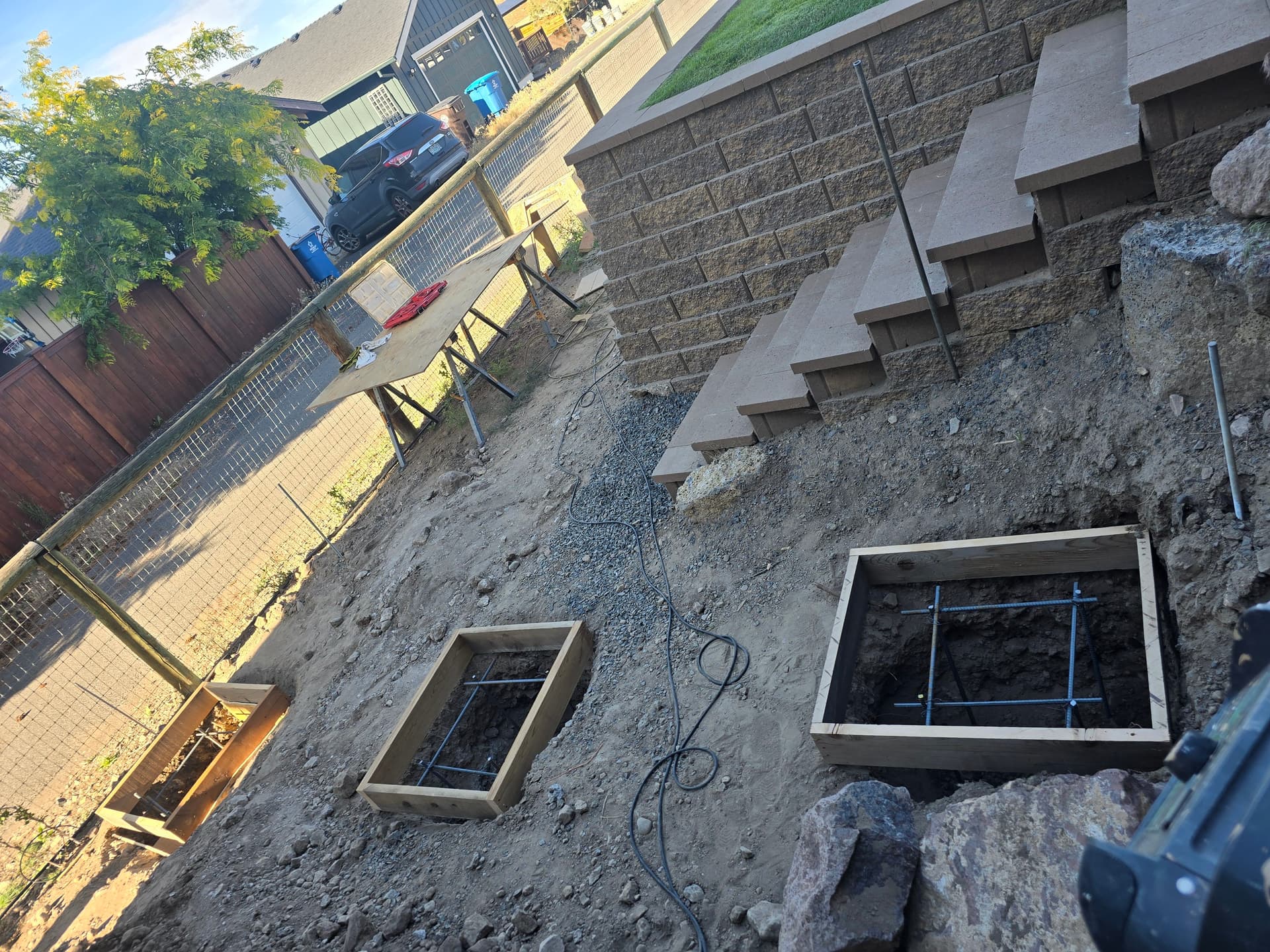
Every deck project we take on starts the same way - below grade. Before a single board gets laid, the foundation has to be right. That's exactly where we are on this deck extension, and this is the stage that determines everything that comes after.
We're working with reinforced pad footings here. Each form is framed out with lumber, excavated to the proper depth, and fitted with a steel rebar grid before the concrete ever gets poured. That rebar cage is the key - it keeps the footing from cracking under load and locks the whole structure in place over time. No shortcuts on this part.
This is the kind of work that's easy to skip over or do halfway. Some crews go straight to tube footings or skip reinforcement altogether. We don't. When you're extending an existing deck, the new footings have to carry real weight and hold up year after year through ground movement, freeze-thaw cycles, and seasonal shifts. A reinforced pad footing handles all of that.
What we end up with after this stage is a rock-solid base that ties directly into the deck framing above. The posts, beams, and decking that come next are only as good as what's underneath them - and this is how we make sure that foundation never becomes a problem down the road.
Good deck building is mostly invisible when it's done right. Nobody brags about their footings at a backyard cookout, but those footings are why the deck still feels solid a decade later. We'd rather do it right once than have a homeowner deal with settling, shifting, or structural issues after the fact.